Support
How can we help?
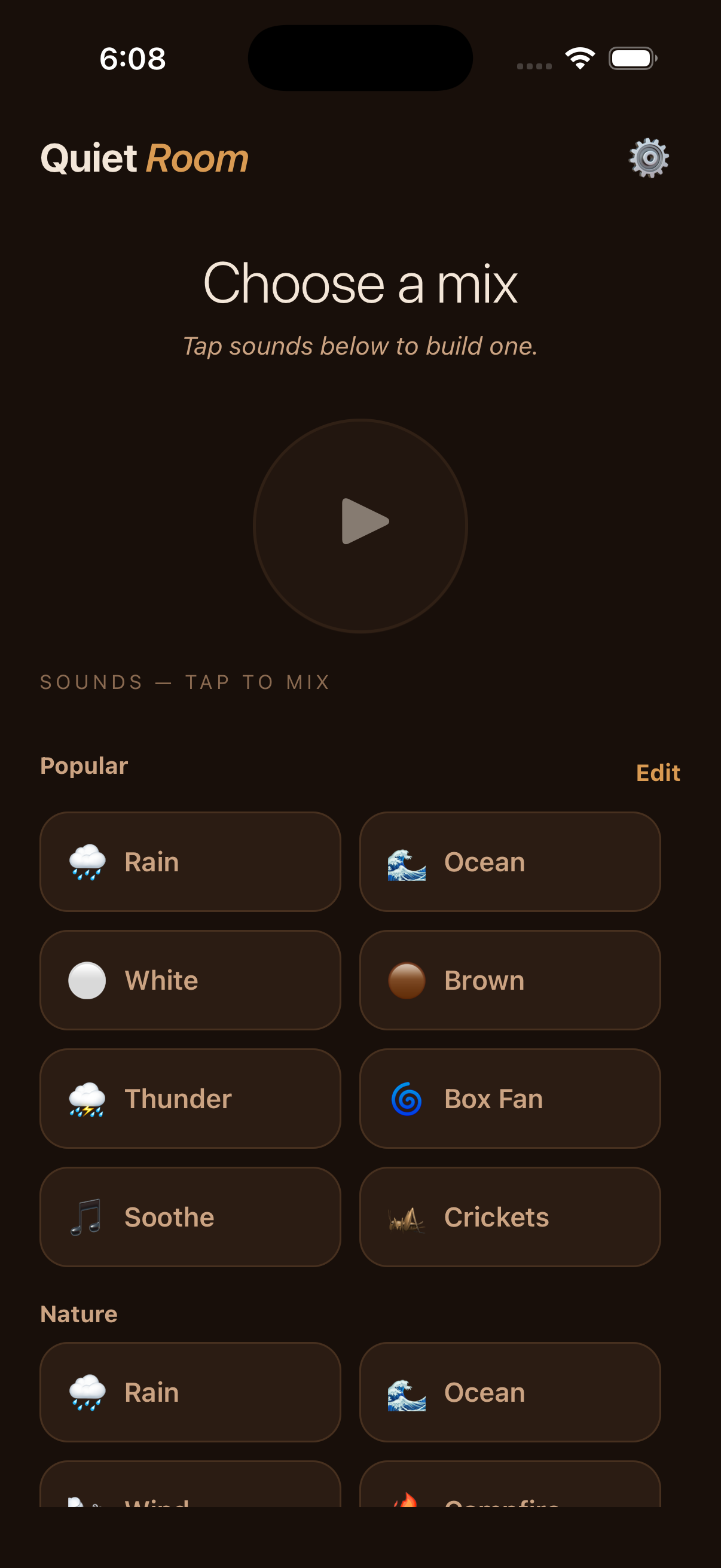
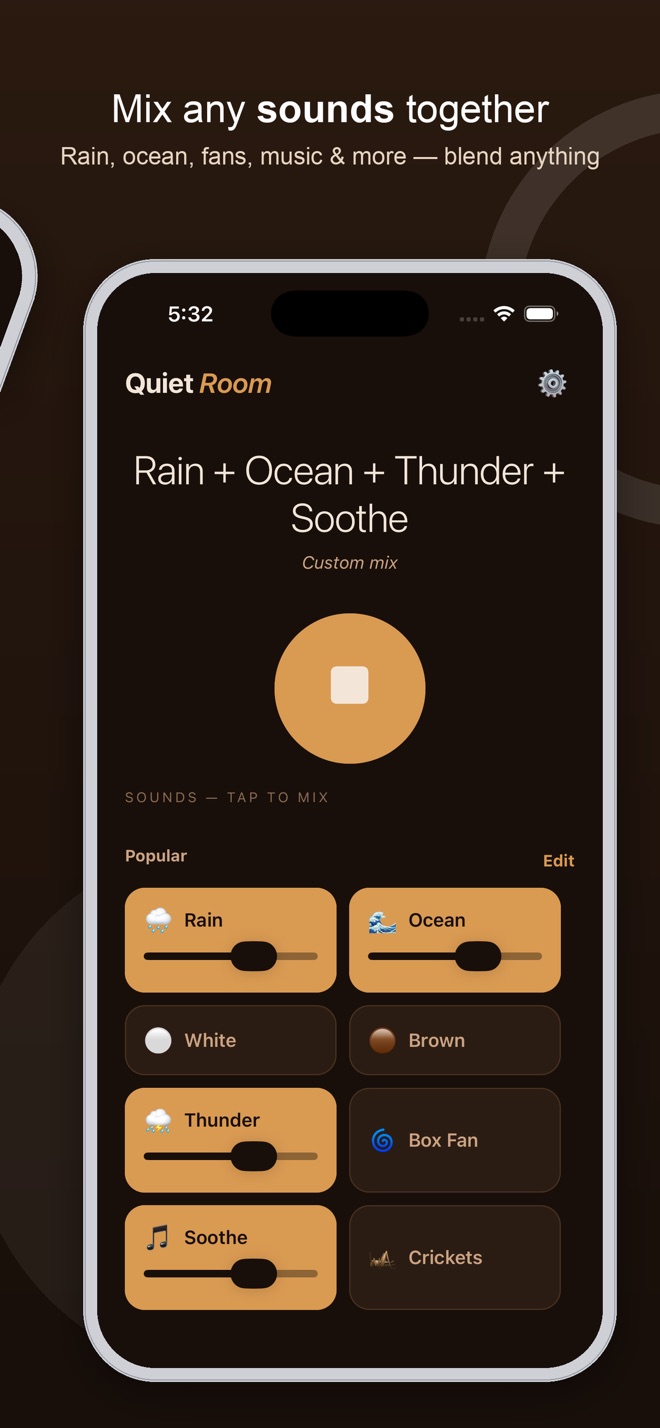
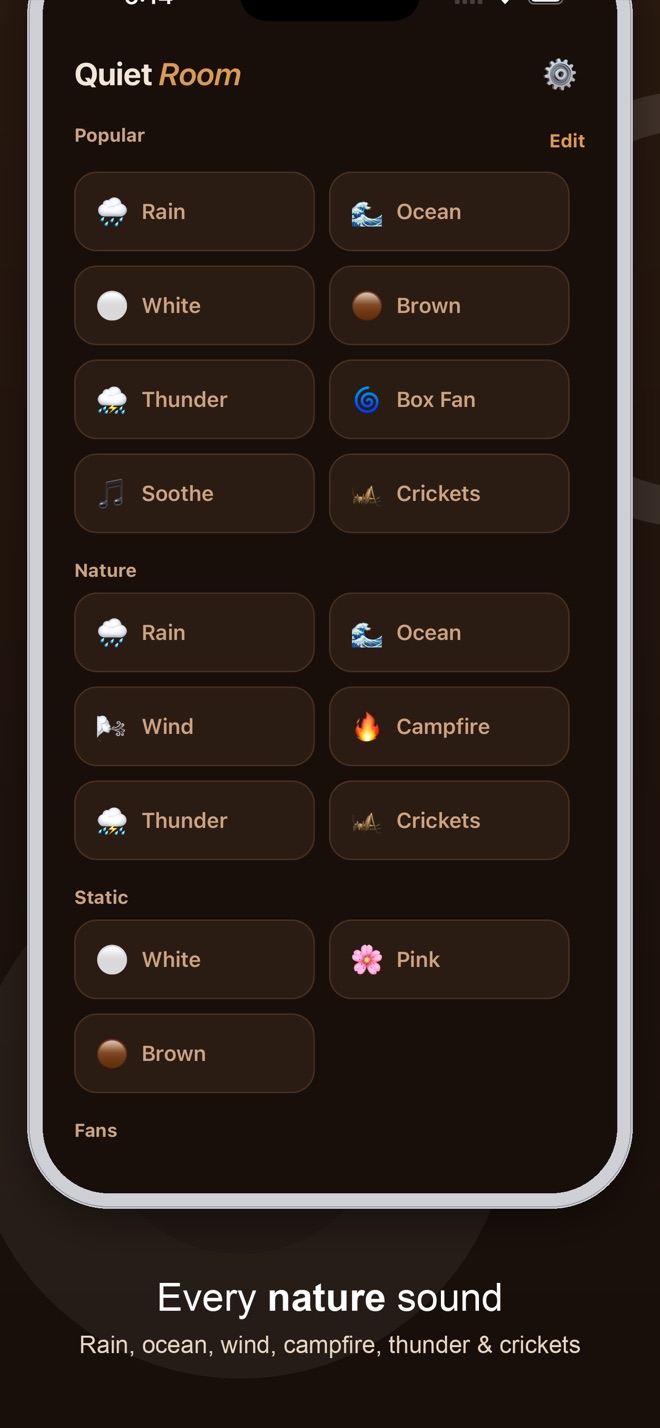
Have a question about mixing sounds, the sleep timer, or anything else? Check the FAQ below or reach out directly.
Do I need an internet connection?
No — every sound is generated on your device, and all playback works with no connection at all.
Why does my mix stop when I lock my phone?
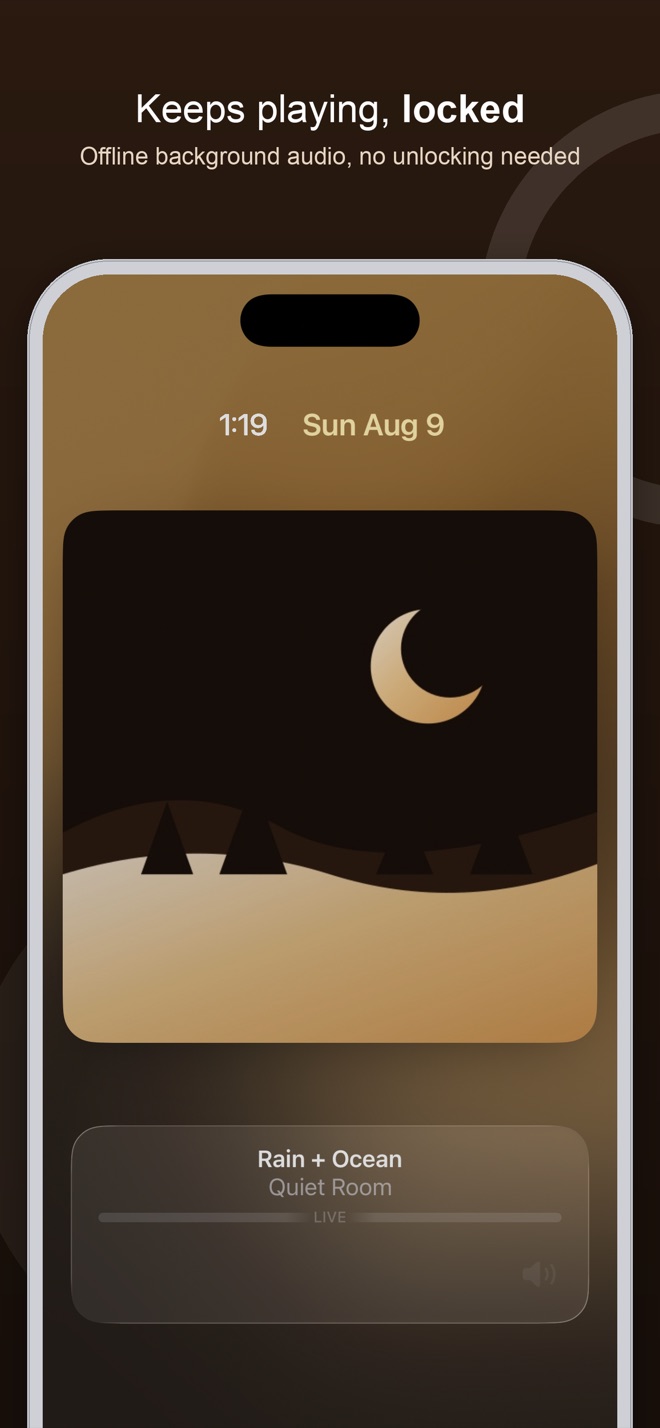
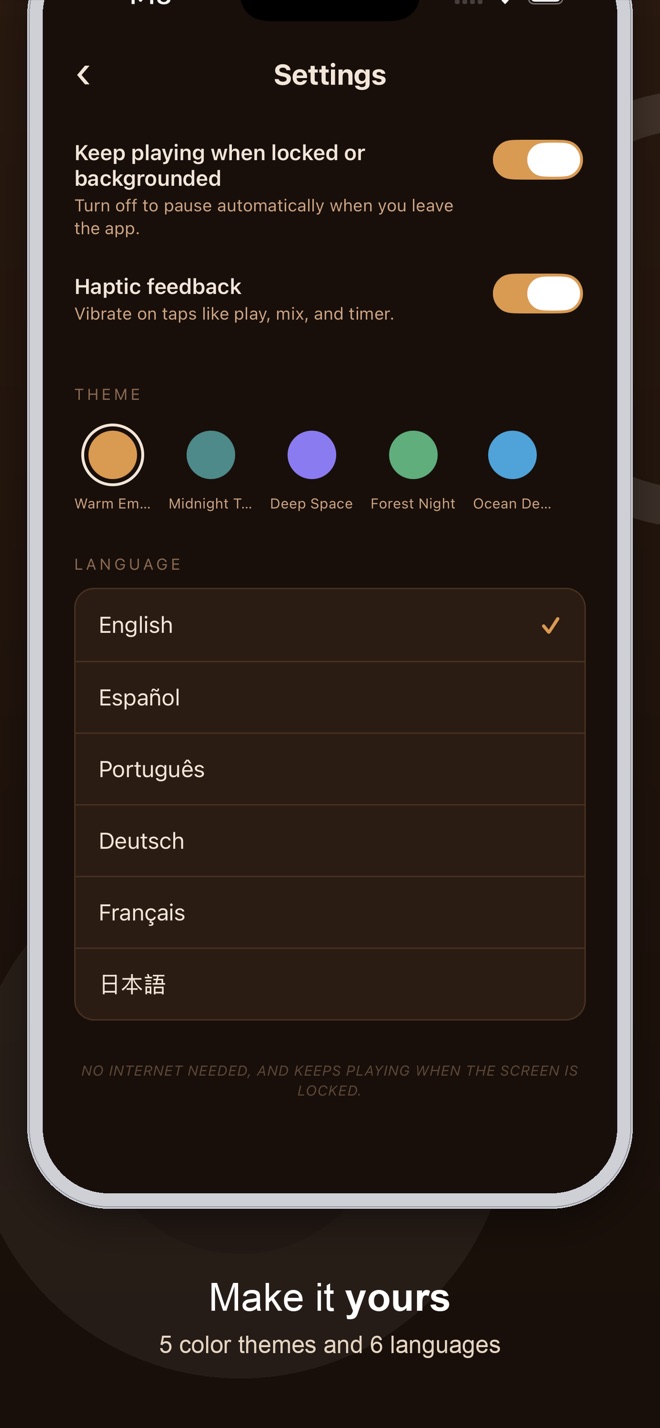
Make sure "Keep playing when locked or backgrounded" is turned on in Settings (it's on by default). If it's off, playback pauses automatically when you leave the app.
How does the sleep timer work?
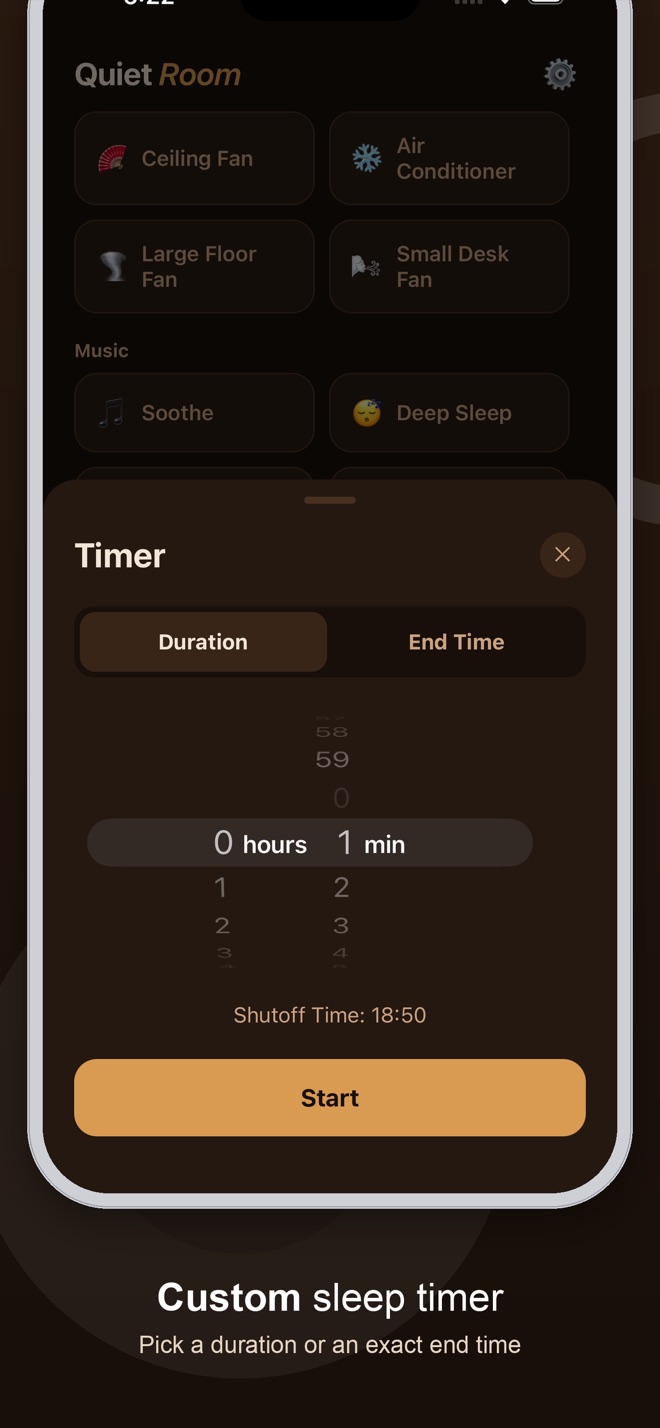
Tap the custom option under "Stop playing after" to open the Timer sheet, choose either a Duration (hours/minutes from now) or an End Time (an exact clock time), then tap Start. Playback fades out smoothly when it ends.
What are the Headphone Tones (binaural sounds)?
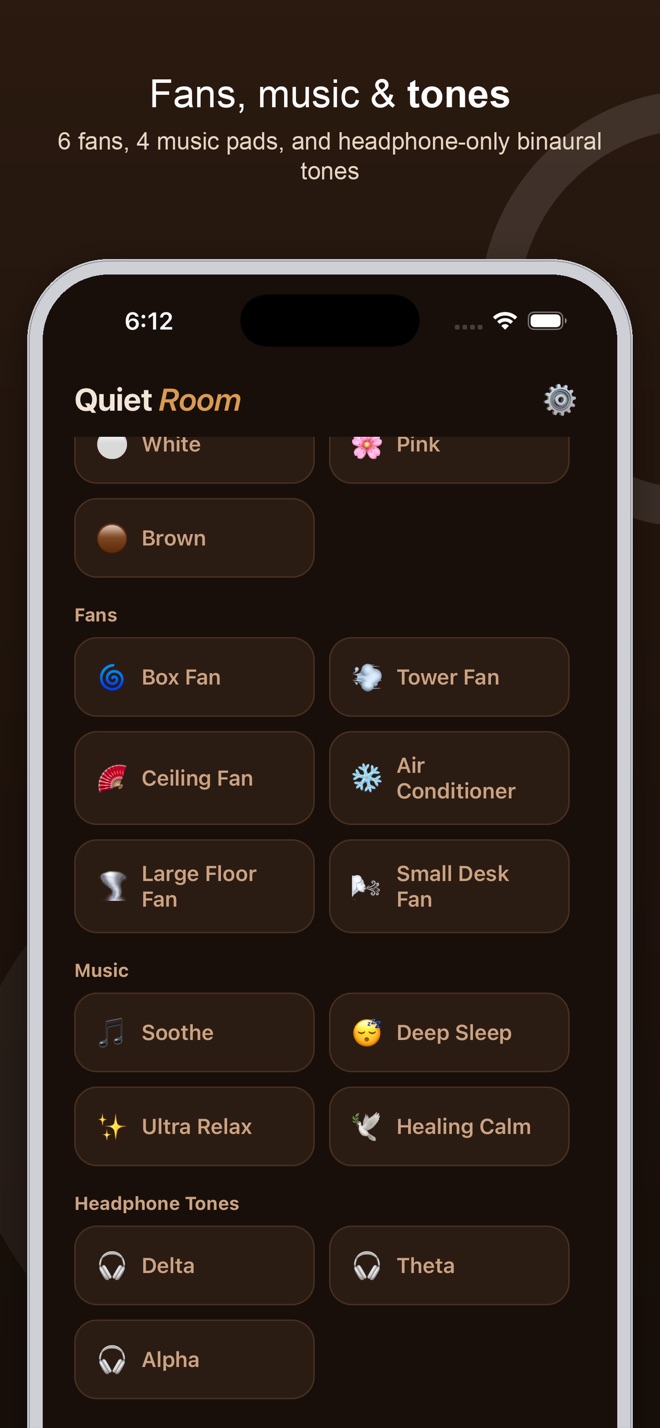
They're binaural beats — two very slightly different tones, one per ear. They only work correctly with headphones, since each ear needs to receive its own distinct tone.
Can I save a mix I like?
Yes — build a mix, then tap "+ Save current" under Saved Mixes to store it for one-tap access later.
How do I change the theme or language?
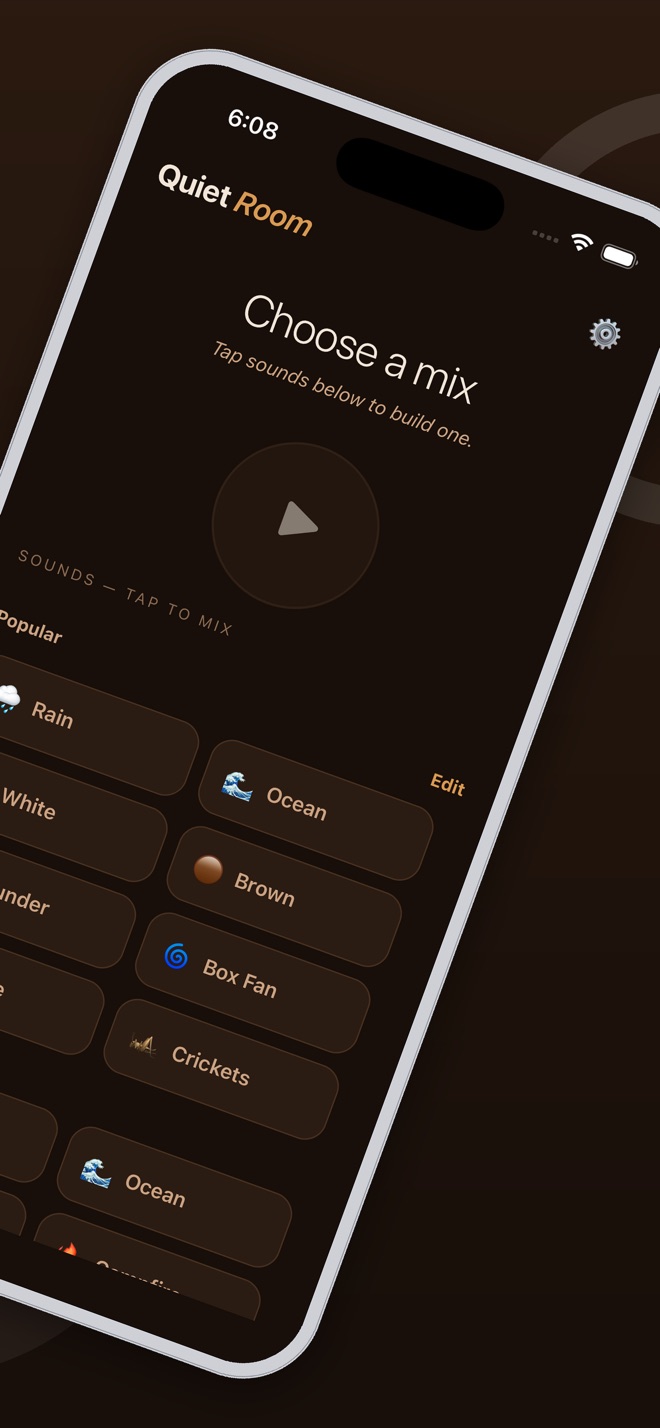
Tap the gear icon in the top-right corner to open Settings, where you can pick from 5 color themes and 6 languages.
Privacy Policy
Your privacy, simply explained
Last updated: August 25, 2026. This policy applies to the Quiet Room iOS application published by Mark Utility Labs.
🔒
Short version: Quiet Room generates every sound on your device and needs no account, and your mixes, settings and listening habits are never sent anywhere. What does leave the app is anonymous and technical: a crash report when the app crashes, and a count of how the unlock screen is used. No ads, no advertising identifiers, no tracking you across other apps or websites, and no sale of your data, ever.
1. What data the app handles
Quiet Room stores your saved mixes, edits to the Popular section, selected theme, language, and sleep-timer preferences directly on your device using standard iOS local storage. None of it is ever sent anywhere, and neither is anything about which sounds you play.
2. How it's stored
All app data lives in local, on-device storage. Deleting the app removes all of it permanently — there's no cloud backup and no account to manage.
3. Crash reports (Firebase Crashlytics)
Quiet Room uses Firebase Crashlytics, a service run by Google, to report crashes automatically so bugs get found and fixed. When the app crashes, a report goes to Google containing the device model, the iOS and app version, the technical details of the crash, and a random identifier Firebase generates for your installation of the app. That identifier is not your name, your email, or your Apple ID; delete and reinstall the app and it changes. A crash report never contains your saved mixes, your settings, or anything about what you listen to.
4. Anonymous usage counts (Firebase Analytics)
When Quiet Room shows its unlock screen, it counts a short list of events through Firebase Analytics, also from Google: that the screen was shown (and which of its two asks it was), that the free week offered there was taken, which layout was shown, and that an unlock completed. It also counts that the one-time offer sheet (the one that shows the other apps) was shown and what was tapped on it, and that the app asked whether you were enjoying it, with which of the two buttons you chose. These events carry no personal content — none of your saved mixes, your settings, or anything about what you listen to, no name, no contact details. Quiet Room never attaches your identity to them; Firebase records them against the same kind of per-install identifier described above. They exist so we can tell whether the unlock screen works, and for nothing else.
5. Unlocking Quiet Room
Apple handles the transaction itself. Mark Utility Labs never sees or stores your card details, billing address, or Apple ID password.
Your unlock is kept on your device, in the iOS Keychain. If you unlock the whole collection of Mark Utility Labs apps at once, that record is also kept in your own iCloud, using Apple's CloudKit, so it follows your Apple Account to a new device. It is stored in your private iCloud database, not somewhere we can browse. Quiet Room does not ask you to sign in to anything, and nothing about your purchase is sent to Google.
6. What is NOT collected
It's worth being explicit about the absences:
- Your saved mixes, your settings and what you listen to are never transmitted anywhere, for any reason.
- No advertising SDKs and no advertising identifiers (IDFA).
- No tracking of you across other companies' apps or websites, and nothing shared with data brokers.
- No name and no email address — Quiet Room never asks Apple for either, even when you sign in.
- No account, login, or profile is needed to use the app.
- No sale of personal data, ever.
7. Who processes your data
Google (Firebase) receives crash reports and the anonymous usage counts. Apple handles the transaction, and keeps the all-apps unlock record in your own private iCloud database. There are no other recipients.
8. Permissions
Quiet Room does not request access to your microphone, camera, location, contacts, or photos. It uses the standard iOS background-audio capability so your mix can keep playing when your screen is locked, and haptic feedback for taps — neither requires you to grant any permission.
9. Children's privacy
Quiet Room is not directed at children under 13 and does not knowingly collect personal information from children. It never asks anyone, of any age, for a name, an email address, or any other identifying detail.
10. Changes to this policy
If this policy changes, we'll update the "Last updated" date above. Continued use of the app after a change means you accept the updated policy.
11. Contact us
Questions about this policy or your privacy? Please contact us at:
Mark Utility Labs
Email: mark@vibecode.review
Terms of Use
The short, plain-English terms
Last updated: August 9, 2026. These terms cover the Quiet Room iOS application published by Mark Utility Labs.
✅
Short version: Quiet Room runs on your device, needs no account, and shows you no ads. Use it however you like.
1. Using the app
Quiet Room is published by Mark Utility Labs for your personal use. It needs no account and no sign-up, it shows no advertisements, and your mixes and settings stay on your device.
2. Purchases
Some features are unlocked by an in-app purchase. Any purchase is a one-time, non-consumable unlock — there is no subscription, nothing renews, and you are not charged again for what you have already unlocked. Purchases are processed by Apple through the App Store rather than by Mark Utility Labs, and refunds are handled by Apple under its standard App Store refund process at reportaproblem.apple.com.
3. Use your own judgment
Quiet Room is provided as a convenience tool. Software can contain mistakes, so for anything critical please confirm against an authoritative source. Mark Utility Labs is not liable for losses arising from use of the app.
4. No warranty
The app is provided "as is" and "as available", without warranties of any kind, express or implied, including fitness for a particular purpose.
5. Acceptable use
Please don't reverse engineer, resell, or pass the app off as your own. That's the whole list.
6. Changes to these terms
If these terms change, we'll update the "Last updated" date above. Continued use after a change means you accept the updated terms.
7. Contact us
Questions about these terms? Please contact us at:
Mark Utility Labs
Email: mark@vibecode.review
 Sleep & Ambient Sounds · iPhone